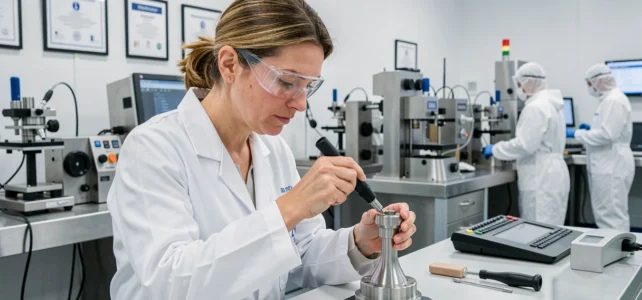
The French medical device sector comprises around 1,500 companies, of which 93% are SMEs, with a consolidated turnover of approximately 34 billion euros. Behind these figures, the industrial fabric is structured around specialized fields, heavy regulatory constraints, and skill bottlenecks that condition the actual innovation capacity of manufacturers.
MDR Regulation and Shortage of Regulatory Profiles: The Real Barrier to Market Entry
The transition to the European MDR (Medical Device Regulation) has tightened the requirements for technical documentation, post-market clinical follow-up, and traceability. For French SMEs, the cost of compliance absorbs an increasing share of the R&D budget.
The most acute problem does not lie in production. Regulatory/quality profiles and market access are the hardest to recruit, according to data from Snitem relayed by BlueDocker. Finding candidates who simultaneously master the MDR, ISO 13485 standards, and the specifics of device classification remains a daily challenge for both mid-sized companies and large groups.
This HR tension concretely slows certification timelines. A poorly assembled technical file can delay CE marking by several months, sometimes up to a year. Manufacturers who internalize their regulatory affairs early gain a measurable competitive advantage in time to market.
Digital and electronic skills pose a second problem. The increasing integration of software into devices (SaMD, Software as a Medical Device) exposes manufacturers to a dual requirement: the MDR and, now, the AI Act for devices incorporating artificial intelligence.
Industrial Relocation: The Urgo Case and Medical Compression
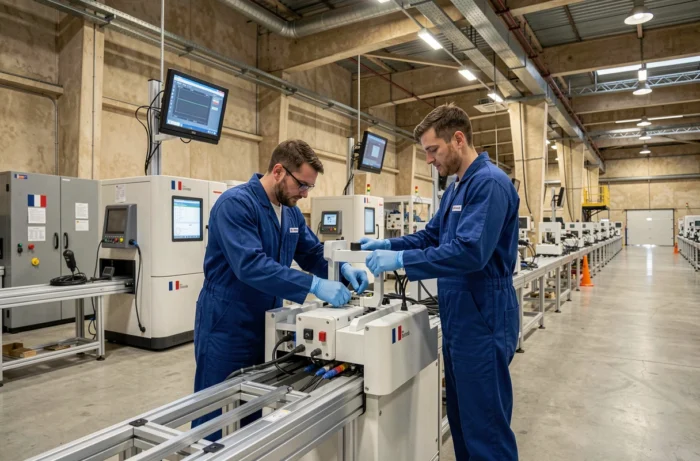
Talking about health sovereignty without a concrete example is mere rhetoric. The Urgo group provides a tangible case: an investment of 60 million euros in Andrézieux-Bouthéon (Loire) for a site dedicated to the manufacture of compression medical devices. The entire production of UrgoK2 will now be carried out in France, while the group already produces 80% of its total output on national territory.
This industrial choice is part of a broader movement. Several French medical equipment manufacturers are reinvesting in domestic production capacities, driven by the pressure from hospital buyers on supply chain traceability and public incentives for reindustrialization.
Relocation is not limited to bringing back assembly lines. It involves rebuilding local subcontracting networks (technical textiles, electronic components, sterile packaging) that had been partially relocated. Without qualified subcontractors nearby, relocating a factory does not secure the value chain.
MedTech Clusters and Regional Specialization of French Manufacturers
The industrial geography of French medical devices is not homogeneous. Three hubs concentrate the majority of production and R&D activity.
- Auvergne-Rhône-Alpes, structured around the Lyonbiopôle cluster, includes players such as Thuasne (orthotics, compression), Stryker (orthopedic implants), and SuperSonic Imagine (ultrafast ultrasound). It is the largest MedTech basin in France in terms of the number of sites.
- Île-de-France, with Medicen Paris Region, concentrates headquarters, biotech R&D, and imaging activities. Hologic France operates there, as well as transfer laboratories linked to Inserm and SATTs.
- Hauts-de-France, via Eurasanté in Lille, is home to Maco Pharma (blood transfusion devices) and a network of over 200 health companies, with a marked specialization in single-use products.
This regional specialization is not anecdotal. It conditions access to skills, research partners, and testing infrastructures. A manufacturer of orthopedic implants based in Lyon benefits from a precision machining subcontracting ecosystem that other regions cannot offer.
Research Transfer and the Role of SATTs
The Technology Transfer Acceleration Companies (SATTs) play a bridging role between academic research (Inserm, CHU) and manufacturers. Technology transfer remains the weak link in French medical innovation. The delays between proof of concept in the lab and industrialization frequently exceed five years, a handicap compared to American or Israeli ecosystems.
Deeptech projects in health, particularly in regenerative medicine and the diagnosis of rare diseases, feed the innovation pipeline of French SMEs. Manufacturers have an interest in forming SATT partnerships as early as the maturation phase, even before industrial prototyping.
Employment and Structuring of the Medical Device Sector in France
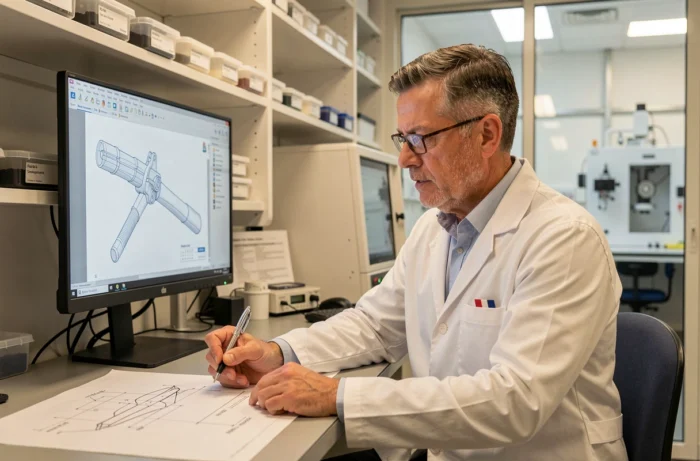
The sector represents approximately 84,000 direct jobs, a figure that exceeds 100,000 when including subcontracting. The majority of these positions are in SMEs with fewer than 250 employees, creating structural fragility: each departure of a quality expert or regulatory affairs engineer has a disproportionate impact.
Snitem, the main professional union in the sector, reports that the most critical recruitment needs focus on three job families:
- Regulatory affairs and quality, to support MDR compliance and post-market surveillance.
- Digital and electronic engineering, for connected devices, embedded software, and diagnostic applications.
- Sales specialists in medical devices, capable of engaging with hospital prescribers on solid scientific bases.
Training these profiles takes time, and university programs have not yet caught up with the pace of the MDR. Companies that invest in internal training and targeted apprenticeship programs better secure their medium-term innovation capacity.
The competitiveness of French manufacturers no longer depends solely on the quality of the finished product. It relies on regulatory mastery, the depth of regional ecosystems, and the ability to attract rare skills. Industrial investments like that of Urgo show that the relocation movement is real, but its sustainability will depend on the patient reconstruction of subcontracting and training networks in the territory.