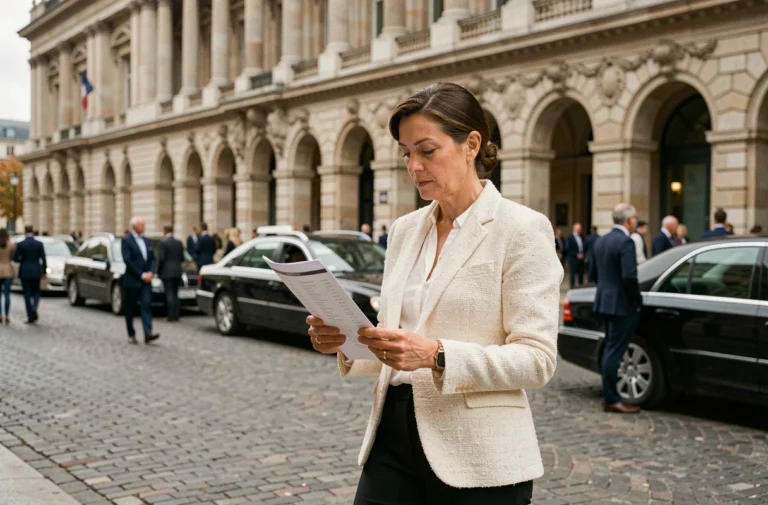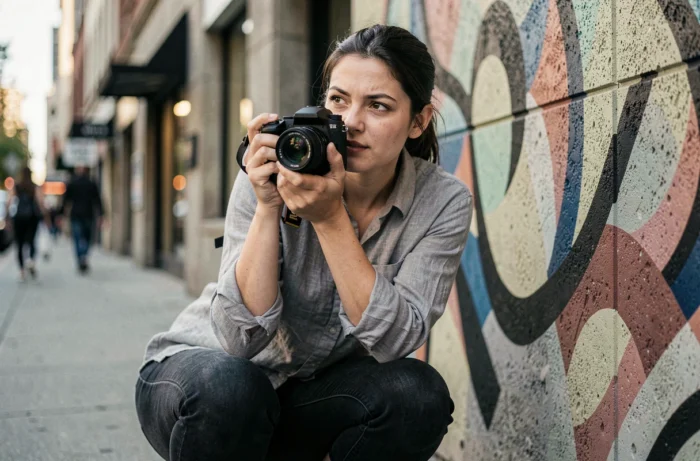
Contemporary photography is defined today as much by its tools as by the questions it raises about the origin of images. Since the massive arrival of generative AI in visual streams, a technical fracture structures the photographic field: that which separates an image captured by a lens from an image synthesized by a diffusion model.
This distinction, long reserved for specialists, has become a public issue. It changes the way photographers claim their work and how the public grants trust to what it sees.
C2PA Standard and Content Credentials: Traceability Embedded in the File
Before discussing aesthetic trends, it is essential to understand the technical mechanism that reshapes the rules of the game. The open standard C2PA (Coalition for Content Provenance and Authenticity) allows a signed manifest to be embedded in the image file. This manifest describes the origin of the shot, the device used, and every modification made to the file.
The principle resembles a food traceability chain, applied to pixels. Each production step leaves a verifiable footprint. A crop, a pass through editing software, an export: everything is recorded in the metadata, in a cryptographically signed manner.
The file no longer contains only standard EXIF data (aperture, shutter speed, focal length), but a complete history of its creation. Content Credentials are now presented as a new grammar of professional photography, capable of materializing the conviction of authenticity directly in the metadata.
Documentary projects and editorial teams are already exploring this standard to certify the integrity of their reports, as evidenced by the reflections published on sharedconvictions.com around the shared convictions between creators and audiences.

Label “Human-Made” and Photography Without Generative AI
Technical traceability is not enough to meet a more visceral demand: knowing whether a human actually pressed the shutter. This is the realm of the French label “Human-Made”, created in 2024. Its principle is simple: the creator commits to not using generative AI in the main creative process.
The label does not prohibit all software use. Classic editing (exposure correction, white balance, cropping) remains accepted. AI can intervene as an ancillary tool, for example, for noise reduction. The dividing line lies at the generation level: the image must come from a real scene captured by a physical sensor.
This initiative responds to a shift in public perception. The AFNUM’s Photo and Video Barometer 2026 indicates that a large majority of practitioners want to clearly identify images not created or modified by generative AI. The demand is for an explicit, visible label that distinguishes “human-made” content from synthetic content.
What the Label Changes for Photographers
- It creates measurable commercial differentiation: a labeled photographer can justify their pricing position against visuals generated at almost no cost
- It imposes a documented workflow discipline, close to the C2PA logic, where each step must be traceable
- It introduces a new contractual vocabulary in the relationships between clients and authors, with clauses regarding the absence of AI generation
Documentary Photography and Shared Conviction Between Author and Viewer
The notion of shared conviction goes beyond the technical framework. It refers to the implicit pact between the one who produces the image and the one who views it. In documentary photography, this pact is based on the idea that the photographed scene existed, under the conditions visible in the print.
Generative AI undermines this pact in unprecedented ways. Photorealistic images of conflicts, disasters, or social scenes can be fabricated in seconds. The viewer loses their usual reference points (grain, optical flaws, shadow consistency) because diffusion models now reproduce these markers with precision.
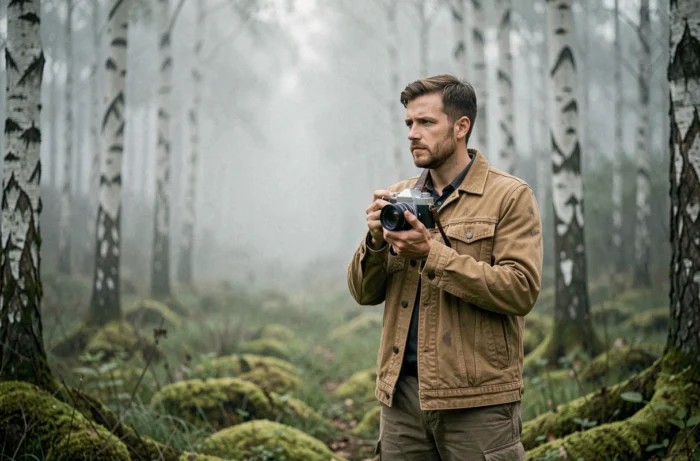
The response from documentary photographers involves several converging strategies. Some publish their raw files alongside the final prints. Others integrate Content Credentials from the moment of capture. Still others claim a deliberately imperfect aesthetic, where technical flaws become proof of authenticity.
The Role of Festivals and Institutions
Exhibition venues play a filtering role. A festival that selects documentary works commits its credibility to the authenticity of the images presented. This institutional certification function existed before AI, but it takes on a new dimension when doubt about the origin of an image becomes systematic.
The Centre Pompidou, for example, incorporates reflections on the status of the image and its production conditions into its educational materials on contemporary photography. The question is no longer just aesthetic or historical: it is now probative.
AI as an Ancillary Tool: Where to Place the Cursor of the Photographic Gesture
The debate is not limited to a binary opposition of human versus machine. AI is establishing itself in photography without replacing the photographer’s gesture, according to sector analyses. It intervenes in noise reduction, upscaling, automatic selection among thousands of shots, and cropping suggestions.
The question of the cursor arises at each step:
- Does a generative replacement of a minor element (electric wire, passerby) fall under classic editing or generation?
- Does algorithmically merged bracketing still produce a “photograph” in the strict sense?
- Does a portrait whose skin has been smoothed by a generative adversarial network (GAN) remain a faithful document of the subject?
These questions do not have a universal answer. They depend on the context of use: press, art, advertising, scientific archives. The C2PA standard at least allows for the documentation of each intervention, leaving it to the final recipient to judge if the acceptable threshold has been crossed.
Contemporary photography is not experiencing a crisis of creativity, but a crisis of trust. Traceability tools, authenticity labels, and collective commitments between authors and viewers are shaping a new framework. Shared conviction becomes a criterion of value on par with composition or light. What will sustainably distinguish a photograph from a generated image may be less its visual quality than the chain of evidence that accompanies it.