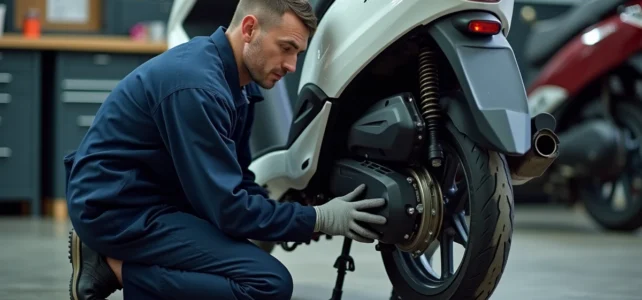
The Yamaha Xmax 125 has a manufacturer-reported speed that exceeds 100 km/h on the speedometer. In practice, many owners notice a discrepancy between this figure and the GPS reality. Several mechanical and usage factors explain this difference, and some can be corrected without touching the engine.
Discrepancy between speedometer and GPS speed on the Xmax 125
Have you ever noticed that your speedometer shows more than what a GPS app on your phone indicates? This is not a defect in your scooter. European regulations require manufacturers to ensure that the speedometer never underestimates the actual speed. Therefore, the speedometer systematically overestimates.
On modern 125s, a reading of around 130 km/h on the speedometer often corresponds to a real speed measured by GPS between 113 and 122 km/h. This discrepancy varies depending on the model, tire wear, and sensor calibration.
Before trying to gain km/h, you should measure the maximum speed of the Xmax 125 with a dedicated GPS or a reliable app. Without this reference measurement, you risk modifying parts for a problem that doesn’t exist.

Weight and load: the factor that forums underestimate
Discussions on forums often revolve around the variator, the exhaust, or the air filter. The total weight carried takes a back seat, even though it directly impacts performance.
A loaded Xmax 125 with a passenger and luggage stabilizes around 90 to 100 km/h GPS on flat terrain. Solo, the same scooter achieves a significantly higher cruising speed. A rider weighing 70 kg and a rider weighing 110 kg will not ride at the same maximum speed, all else being equal.
This observation has practical consequences. If you often ride with a passenger or with a loaded top case, the loss of speed is not a sign of failure. The engine provides the same power but moves more mass.
Preparation before a ride with a passenger
Two adjustments deserve your attention before taking a passenger:
- Rear shock preload: increase it by one or two notches to compensate for the extra weight. Without this adjustment, the rear sags, the geometry changes, and handling deteriorates.
- Tire pressure: check it cold before each loaded ride. Too low pressure increases rolling resistance and can cause a loss of several km/h in stabilized speed.
- Remove unnecessary accessories (empty luggage rack, unused saddlebags) to limit aerodynamic drag.
Routine maintenance and common mistakes on the Xmax 125
An engine in good condition delivers its full power. A poorly maintained engine gradually loses km/h, so the owner may not notice.
Clogged air filter
The air filter restricts the flow of fresh air when it is saturated with dust. The engine then runs with a mixture that is too rich, which reduces the available power at high revs. Replacing a clogged air filter can be enough to regain original performance.
Worn drive belt
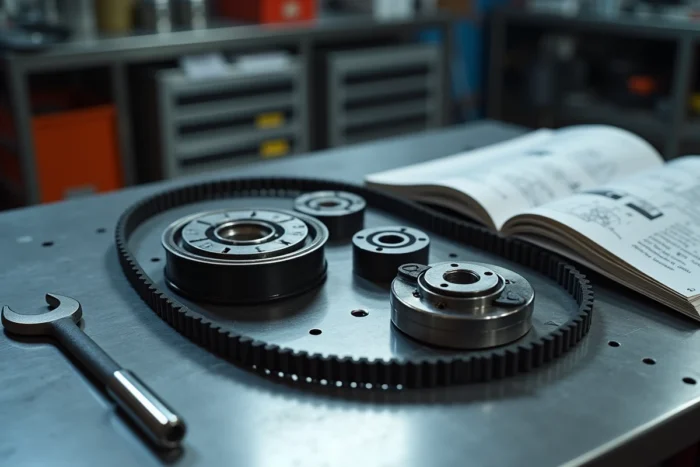
The variator belt wears out and loses width over the kilometers. When it thins, it sits lower in the variator cheeks and no longer allows reaching the longest ratio. The result: the engine revs up without gaining speed.
A worn belt needs to be replaced, not just tightened. Riding with a tired belt also accelerates the wear of the rollers and the variator itself.
Variator rollers
The rollers (small cylinders in the variator) wear out and lose weight. Lighter rollers change the variation range and can prevent the engine from reaching its optimal speed at peak. Checking their condition and weight is part of periodic maintenance.
Xmax 125 variator adjustments: understand before modifying
Changing the variator rollers is the most common modification discussed on forums. The principle is simple: heavier rollers push the variator to climb faster through the ratios, favoring top speed at the expense of acceleration. Lighter rollers do the opposite.
Before ordering a kit, ask yourself: what do you use your Xmax for? If you ride in the city with frequent stops, heavy rollers will make starts softer. If you make long trips on highways, the gain in stabilized speed may be worth the trade-off.
- Note the original weight of your rollers before any change, so you can revert back.
- Change only one parameter at a time (rollers OR belt OR torque spring) to isolate the effect of each modification.
- Do not combine multiple modifications without understanding their interaction, or you risk degrading overall performance.
An aftermarket variator (like the Malossi Multivar) allows for fine-tuning these adjustments, but it does not turn a 125 into a racing machine. The engine remains limited by its displacement and nominal power.
Mixture screw and unstable idle: an unknown trap
On some injected Xmax 125s, an unstable idle or stuttering at low revs indicates a problem with the air-fuel mixture. The throttle body can get dirty over time, and the throttle body deserves periodic cleaning.
An idle that is too low forces the engine to run at under-rev. An unstable idle also degrades the rev-up and the power available at full load. If your Xmax hesitates when accelerating or stalls at a red light, have the intake circuit checked before touching the variator.
This type of diagnosis is accessible to a scooter mechanic equipped with an OBD2 scanner. The cost of cleaning the throttle body is modest compared to replacing a complete variator.
Optimizing the speed of an Xmax 125 starts with rigorous maintenance and a reliable measurement of actual speed. Mechanical modifications come afterward, one by one, on a sound basis. A clean filter, a good condition belt, and properly inflated tires often make more difference than a variator kit installed on a neglected engine.