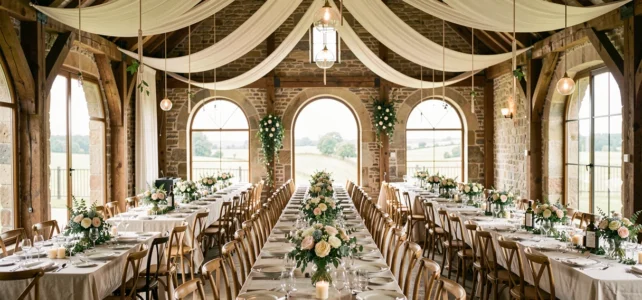
Choosing trendy wedding decorations means making choices between color palettes, materials, and staging formats that evolve each season. For 2026, the shift is clear: fixed themes (rustic, bohemian, vintage in identical variations) are giving way to custom combinations where each element, from the reception table to the ceremony, reflects a personal choice rather than a predefined model.
The following ten ideas are concrete techniques or stances, selected because they provide a real visual departure from standardized weddings.
1. Plum and olive green palette for an autumn wedding
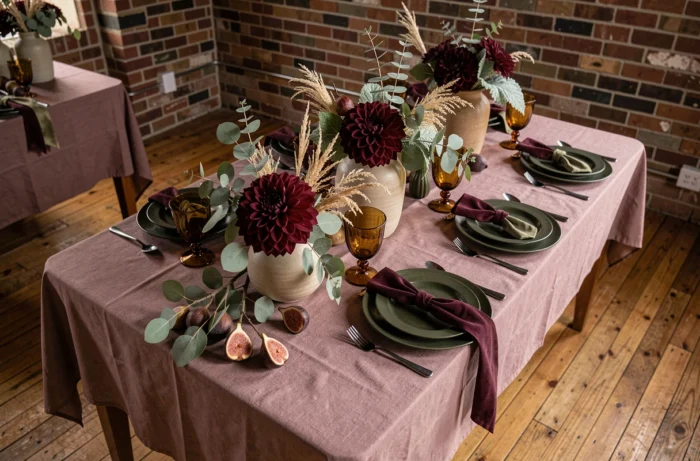
The combination of plum and olive green is emerging as the trending palette for autumn weddings in 2026, with a significant increase in Pinterest searches for this combination. It is gradually replacing the monochrome terracotta that has dominated for several seasons.
Specifically, plum appears in stationery, napkins, and chair ribbons, while olive green is represented through natural foliage (eucalyptus, olive branches). The balance works because both tones share a similar depth without competing with each other.
By browsing inspirations on Mariage et Décoration, one can easily spot variations of this palette suited to different reception formats.
2. Structured earth tones with smoky glassware
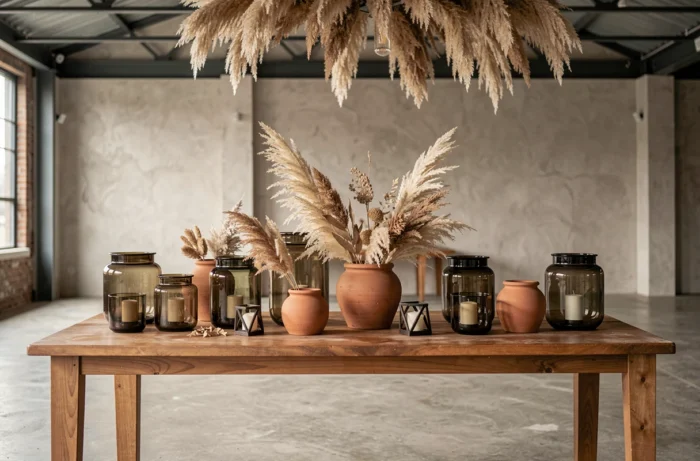
Structured earth tones (espresso brown, warm nudes, matte terracotta) are no longer confined to rustic themes. In 2026, they are paired with antique gold metal and smoky glassware for a sophisticated look, far from the raw barn aesthetic.
Handcrafted ceramics for plates and vases replace industrial dishware. This choice of materials creates an irregular texture that captures candlelight more warmly than traditional clear glass.
3. Vertical tablecloths with string lights
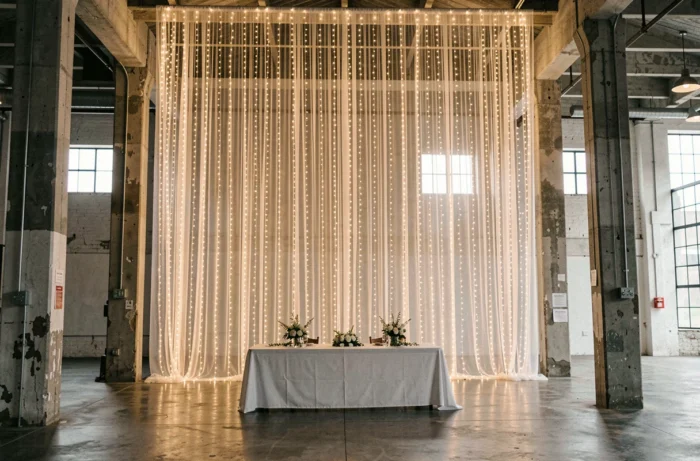
Horizontal string lights remain a classic. The visual departure comes from transitioning to vertical tablecloths, suspended from the ceiling to the floor to form a luminous wall behind the head table or ceremony space.
This format transforms a bare wall into a photographic backdrop. It works well both indoors (barn, vaulted hall) and outdoors (open wooden structure). The cost remains moderate compared to a complete floral arch.
4. Eco-responsible decoration without greenwashing
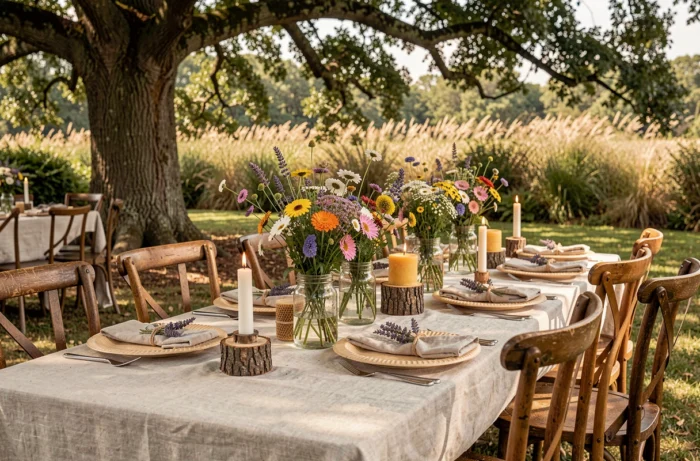
The label “eco-responsible wedding” has become a common marketing argument. The risk of greenwashing is real: using terms like “sustainable” or “green” without verifiable commitment.
To avoid this trap, three concrete criteria make a difference:
- Seasonal flowers grown locally, no imported roses rebranded as “natural”
- Rental of furniture and decorative elements instead of new single-use purchases
- Stationery on seeded paper or replacement with a digital format for the seating plan
Renting decorations reduces waste volume much more effectively than simply choosing recycled materials.
5. Bride’s bouquet with unconventional flowers
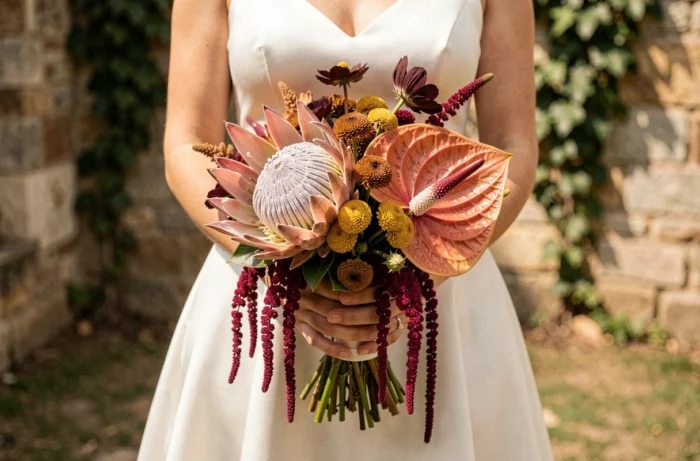
The bouquet trends for 2026 are moving away from the trio of peony-rose-eucalyptus. Florists are now working with less expected varieties: cascading amaranth, ornamental grasses, café au lait dahlias, miniature proteas.
The interest is not only aesthetic. These varieties offer textures and asymmetrical volumes that create a sculptural bouquet, closer to a floral art composition than a traditional round arrangement.
6. Head table in elongated banquet format
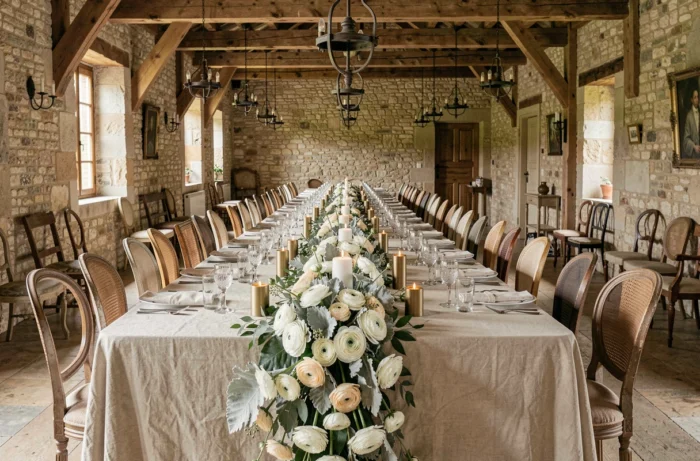
The banquet format (a single long table or several aligned rectangular tables) is gradually replacing round tables for eight to ten guests in medium-sized weddings.
The continuous greenery runner, made up of low foliage and candles, becomes the visual centerpiece of the reception. This format encourages conversation among guests and reduces the number of floral arrangements needed, as a single decorative line replaces six to eight individual centerpieces.
7. Secular ceremony with asymmetrical arch
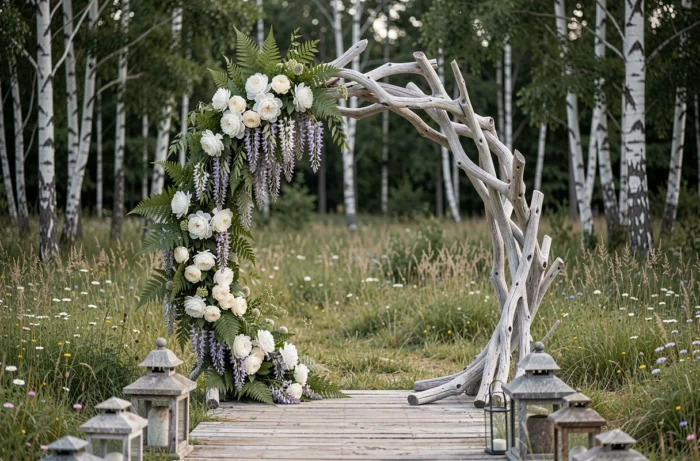
The symmetrical floral arch remains common, but the shift towards asymmetrical structures (flowers concentrated on one side, irregular branches) produces a result that is less “catalog” and more organic.
This approach works particularly well outdoors, where the natural landscape complements the open side of the arch. It also allows for a reduction of the floral budget by about a third compared to a fully adorned arch.
8. Cocktail space with personalized lounge corners
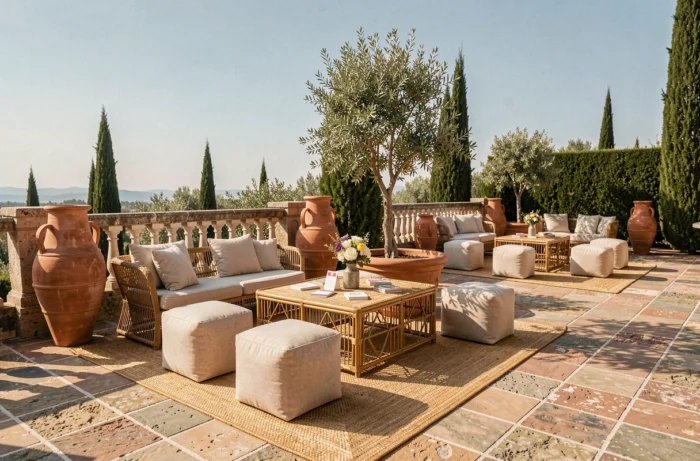
Rather than a standing reception where guests gather around identical high tables, the trend for 2026 is to create several themed micro-spaces: a corner with rugs and cushions, a dedicated cocktail bar, a games area.
This approach naturally segments the flow and avoids the “crowded compact” effect around the buffet. Renting vintage furniture (rattan chairs, velvet benches) is enough to differentiate each area without heavy decorative investment.
9. Seating plan on original support
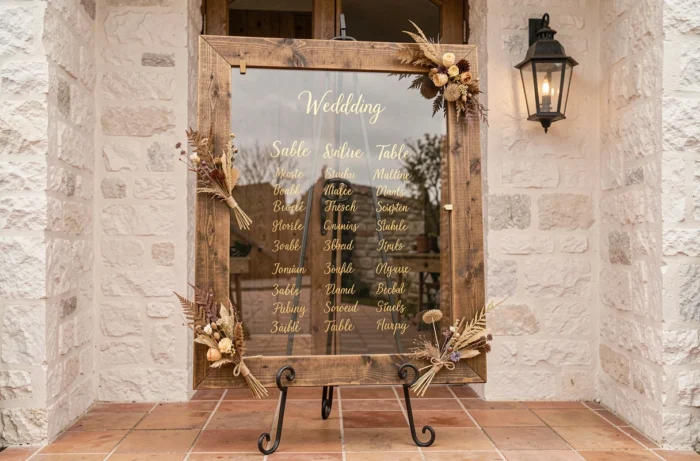
The seating plan is one of the most seen and photographed elements. Replacing the classic easel with an original support (vintage mirror, calligraphed acrylic plaque, burnt wood panel) makes it a true decorative element.
- Antique gold mirror with names calligraphed in white liquid chalk
- Transparent acrylic panel suspended from a copper frame
- Raw wood board with laser engraving of guests’ names
The seating plan becomes a decorative object in its own right when the support is chosen in harmony with the colors and materials of the reception.
10. Personalization instead of a single theme
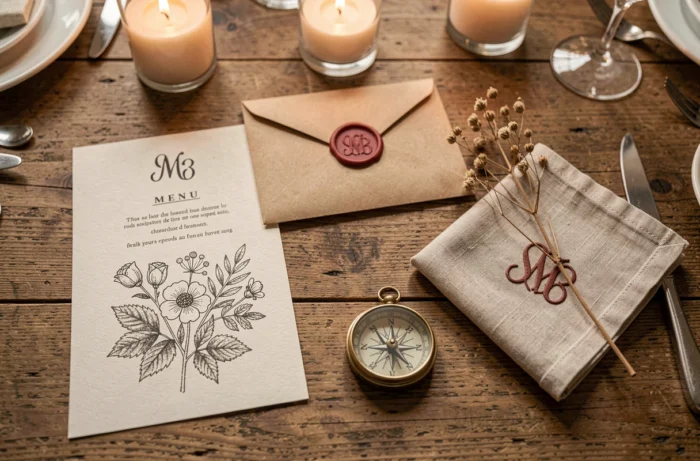
The most striking data for 2026: weddings centered around a single theme are declining in favor of personal assemblies. Couples mix chic, vintage, and natural elements without adhering to a closed stylistic label.
This approach requires a clear thread, often a palette of two to three colors and a dominant material (wood, brass, linen). Without this thread, the risk is visual cacophony. With it, the result is a wedding that looks unlike any other.
The underlying trend for wedding decorations in 2026 can be summed up in one sentence: less thematic conformity, more material coherence. Choosing two or three strong stances among these ten ideas, rather than trying to integrate everything, remains the most reliable method to achieve a result that holds visually throughout an entire day.