The leisure market in France is undergoing a silent restructuring. The documented decline in vacation departures since 2025, confirmed by the Alliance France Tourisme, which points to a significant slowdown in departures and a reduction in spending on-site for more than half of households, is reshuffling the cards. Leisure practices are being reconfigured around short formats, proximity, and a more fragmented relationship with free time than before.
Micro-adventure and local leisure: a rapidly structuring segment
Micro-adventure is no longer a niche concept reserved for seasoned hikers. It is shaping up as a tangible alternative to traditional stays: short getaways, budget-friendly, minimal equipment, and the promotion of nearby territories (forests, lakes, neighboring villages). This format responds to a dual constraint, both budgetary and temporal, which we are observing increasingly.
The key technical point to remember: micro-adventure operates on a very favorable time/immersion ratio. A camping trip less than an hour’s drive away, a canoe session on a local river, or a night hike produces a break effect comparable to an extended weekend, without the costs of transportation and accommodation.
For those following the evolution of recreational practices through all the sections of Journal Global, this rise of short formats is a strong signal. It reflects a sustainable shift in expectations: less destination, more experience.
What distinguishes a micro-adventure from a simple walk
The difference lies in intentionality. A micro-adventure involves an element of novelty or slight voluntary discomfort: sleeping outdoors, exploring an unknown trail, navigating without GPS. It is this break from routine that generates the feeling of escape, not the distance traveled.
Creative leisure and DIY: beyond a pastime, a lever for disconnection
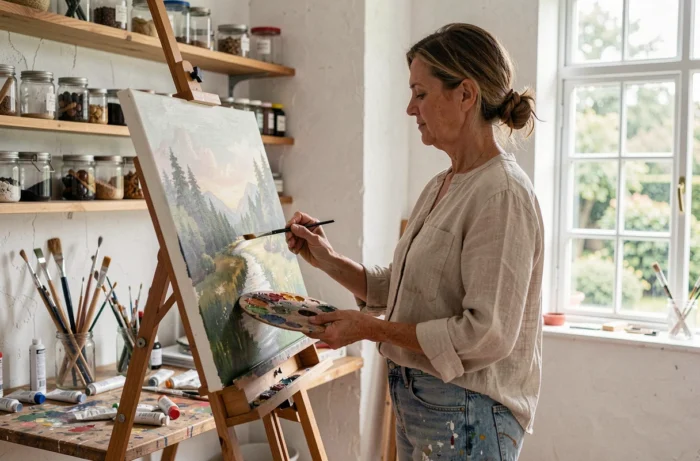
Handicraft activities (DIY, pottery, sewing, gardening) are experiencing a resurgence of interest that goes beyond mere entertainment. We recommend considering them as practices of active disconnection, as opposed to passive disconnection (reading, contemplation).
DIY and crafts engage fine motor skills and concentration on a tangible result. This mechanism, well documented in occupational therapy, explains why these activities produce a greater anti-stress effect than simple rest.
Which creative formats to prioritize with family
In a family context, three criteria determine the success of a creative activity:
- Technical accessibility: a project that can be completed without prior skills, using common materials (cardboard, paint, natural elements from the garden)
- Calibrated duration: between thirty minutes and two hours; beyond that, children’s concentration drops and the activity becomes a chore
- Visible result: a finished object, a displayable or usable creation, that anchors the memory of the shared experience
A well-calibrated creative workshop favorably replaces an expensive outing. The feedback we collect confirms that perceived satisfaction depends more on engagement in the process than on the budget invested.
Slow tourism in France: why immersive stays are gaining ground
Slow tourism, long confined to marketing discourse, is becoming a measurable practice. Recent reports from Dordogne and Landes show vacationers explicitly seeking tranquility and local immersion rather than the accumulation of visits.
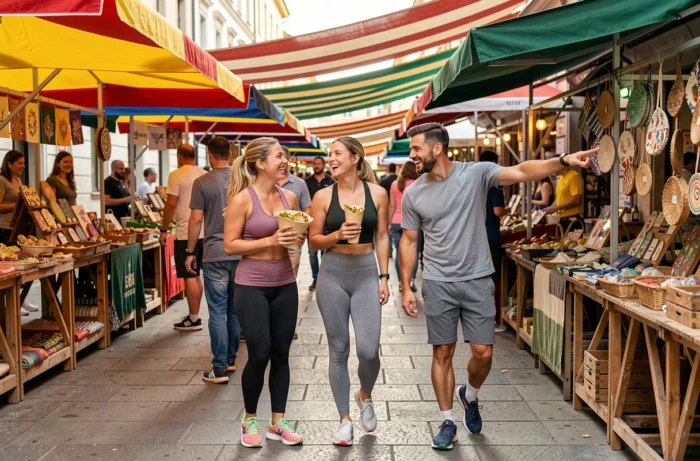
This shift can be explained by the convergence of several factors. Budgetary pressure encourages reduced travel. The Réseau Action Climat recommends a reorientation of French tourism strategy towards local clientele. And nearly two out of five French people do not go on vacation, creating a considerable domestic market for local leisure and short stays.
Immersive activities: the case of experience parks
Parks offering immersive experiences (life-size escape games, sensory trails, collective challenges) capture part of this demand. Their value proposition is based on a simple principle: to compress in a few hours the emotional intensity that a trip provides over several days.
This model works particularly well for families with children, where the logistics of going on vacation represent a real barrier. Proximity adventure is becoming the dominant format for family leisure.
Home sports and online classes: a market that is professionalizing
Online sports classes are structurally gaining ground, not just temporarily. What started as a fallback solution during lockdowns is establishing itself as a lasting practice, driven by improved content quality and diversification of offered disciplines.
We are observing a growing segmentation of the offer. Platforms no longer just offer yoga or general fitness, but specific disciplines (postural strengthening, joint mobility, targeted physical preparation) with a level of technical demand that justifies the subscription.
Board games and indoor activities: the return of the collective
The home is becoming a place for active leisure once again. Modern board games (cooperative, narrative, with complex mechanics) attract an adult audience that finds a social alternative to screens. This trend is strengthening as the budget for outings contracts.
Home leisure is no longer a default option; it is a conscious choice. Sales of board games, creative materials, and home sports equipment reflect this evolution.
The reshaping of the leisure landscape in France follows a clear logic: less distance, more intensity. Whether the format is a micro-adventure in the forest, a DIY workshop in the garden, or an online sports session, the common denominator remains the search for a real break from daily life, calibrated to the available time and budget. Industry players who understand this are already structuring their offerings around this constraint.