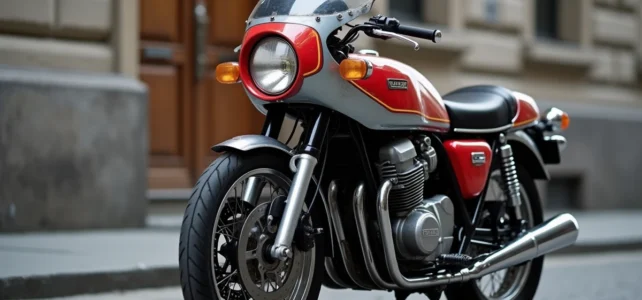
The Honda CB 900 Boldor, produced between 1979 and 1983, is one of the Japanese four-cylinder motorcycles whose value continues to rise in the vintage motorcycle market. Insuring this type of machine in 2026 is not just about choosing between third-party and comprehensive coverage: the motorcycle technical inspection, restrictions related to collector contracts, and frequent modifications to these models significantly change the situation for the owner.
Motorcycle Technical Inspection and CB 900 Boldor: What Insurers Now Check
Since the implementation of the motorcycle technical inspection in 2024, the relationship between the inspection and insurance coverage has tightened. In 2025-2026, several insurers apply increased deductibles or refuse coverage in the event of a serious claim if the motorcycle is not up to date with its technical inspection. This rule applies even when the lack of inspection is not the direct cause of the accident.
For a CB 900 Boldor over forty years old, this issue is far from trivial. The condition of the braking system, original lighting, and exhaust system can pose problems during the inspection. A machine that fails or is not presented for inspection exposes its owner to a gap in coverage that many riders underestimate.
Before even comparing quotes, the first step is to ensure that the motorcycle is compliant. The owner wishing to insure a CB 900 Boldor on Annu Moteurs will find a complete detail of the guarantees to cross-reference with the actual technical condition of the machine.

Collector Contract or Standard Contract: Pricing Arbitration for a Vintage Motorcycle
The CB 900 Boldor is now over thirty years old, which opens the door to so-called “collector” contracts with many insurers. This status has two very concrete effects on the premium and usage.
Lower Premium Under Usage Conditions
A collector contract significantly reduces the annual premium compared to a standard motorcycle contract. The difference is explained by limited mileage and strictly leisure use. In return, commuting trips are excluded, and some insurers require the owner to have a second primary vehicle insured elsewhere.
For an owner who takes their Boldor out on weekends and during gatherings, this type of contract is often the most suitable. However, those who use their motorcycle daily have no choice but to opt for a standard contract, with a significantly higher premium for a motorcycle of this category.
Fluctuating Value, a Problem for Compensation
The value of a CB 900 Boldor varies greatly depending on its condition, originality, and the presence of its original parts. Without prior expertise or an agreed value in the contract, compensation in the event of theft or total destruction may not reflect the actual price of the machine.
Negotiating an agreed value at the time of subscription is the only way to secure this point. This requires having the motorcycle appraised by a professional and providing detailed photos to the insurer. The additional cost on the premium remains moderate compared to the risk of under-compensation.
Modifications and Non-Original Parts: The Gray Area of Coverage
CB 900 Boldors rarely circulate in their factory configuration. 4-in-1 collectors, modern shock absorbers, improved braking, non-original semi-fairings: these modifications are common and sometimes necessary for safe riding.
The problem is that any unreported modification can lead to a refusal of compensation or a reduction in coverage. Insurers increasingly require a precise declaration of modifications made to the machine, with supporting documents.
Here are the points to declare systematically when subscribing:
- The type of exhaust mounted (original line, aftermarket 4-in-1 collector, homologated or non-homologated silencer)
- Modifications to suspension, braking, or chassis (swingarm, fork, calipers)
- The addition or removal of bodywork elements (semi-fairing, fork head, windscreen)
- The replacement of the engine or a modification of the original displacement
An insurer specializing in vintage motorcycles will more easily accept these elements than a generalist. Field feedback varies on this point: some owners declare everything without extra cost, while others face a surcharge or outright refusal depending on the type of modification.
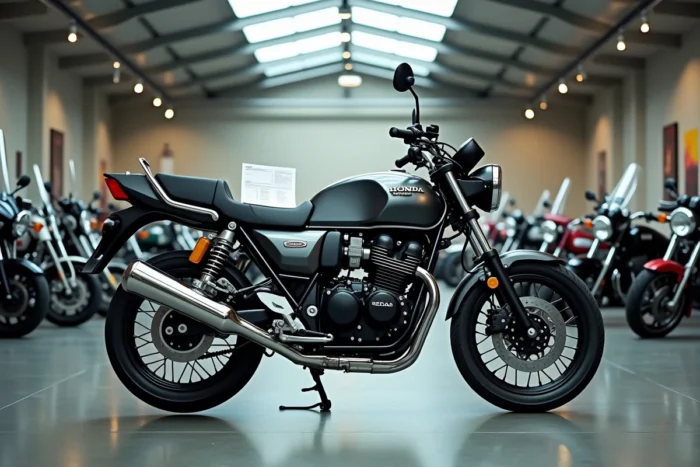
Guarantees to Prioritize and Budget Items for a CB 900 Boldor in 2026
Beyond the choice between third-party and comprehensive coverage, three guarantees deserve particular attention for this model.
- The theft guarantee with agreed value, because the value of 1980s Honda fours attracts attention and period locks do not last long
- The equipment and accessories guarantee, which covers the parts mounted on the motorcycle (fairings, optics, luggage) in case of a fall or theft
- The bodily injury guarantee for the rider, often absent from basic third-party formulas, even though it constitutes the heaviest compensation item in the event of a serious accident
The annual budget depends on the rider’s profile, geographical area, and parking method. A closed garage and an SRA-approved lock significantly reduce the premium, regardless of the insurer. For a vintage motorcycle used for leisure, the premium generally remains below what the owner of a recent sports bike of the same displacement would pay.
The vintage motorcycle insurance market remains fragmented. Few online comparators include collector contracts, which often requires directly contacting specialized insurers to obtain a realistic quote. The best approach is to request at least three quotes, specifying the exact condition of the machine, the modifications made, and the intended use.