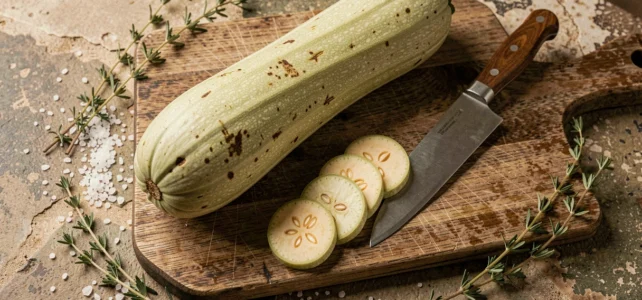
The long squash from Nice is a vegetable from the cucurbit family, historically grown in the Nice hinterland. Its dense, slightly sweet, and low-water flesh makes it particularly suitable for pan cooking, where other squashes release too much water and end up as an unintentional puree.
This vegetable, however, remains poorly documented in online recipes, often confused with butternut squash or drowned in baked preparations that do not showcase its texture.
Texture and water content: what distinguishes the long squash from Nice in quick cooking
Most squashes present a recurring problem in the pan: they release a quantity of water that prevents any caramelization. The flesh falls apart, the bottom of the pan turns into broth, and the result oscillates between compote and boiled vegetable.
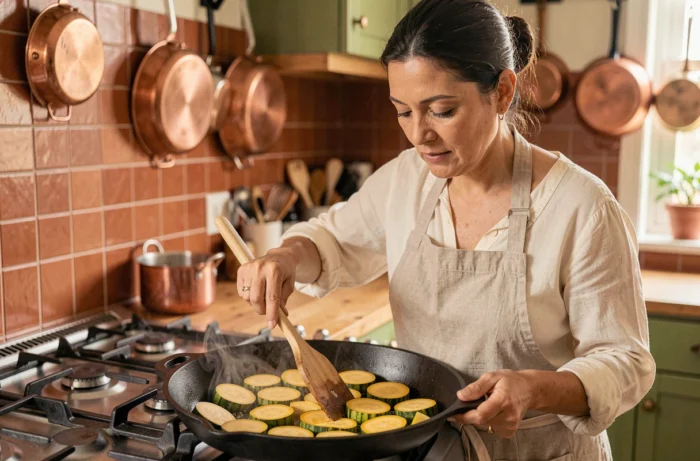
The long squash from Nice behaves differently. Its firm and low-water flesh allows for high-heat cooking without excess liquid. Cut into cubes or thin slices, it withstands medium-high heat and develops a golden crust in just a few minutes, provided the pan is not overcrowded.
This behavior makes it more similar to zucchini than to butternut squash in terms of cooking consistency. However, its rounder taste, with a slight nutty note, places it in a different flavor profile. To explore this approach, a recipe for long squash from Nice in the pan details the proportions and timing suitable for a weeknight.
A common pitfall is cutting the pieces too large. Beyond two centimeters in thickness, the center remains raw while the outside browns. Slices of one centimeter or regular cubes ensure even cooking.
Choosing fats and seasonings for a successful sautéed squash
Olive oil remains the most common fat for this type of preparation. It holds heat well and complements the flavor of the flesh without masking it. Butter, when used alone, burns too quickly over high heat. A mixture of the two (dominant olive oil, a knob of butter added at the end of cooking) provides creaminess without compromising color.
Spices and herbs that work with this squash
The recipe from the AMAP of Chaudron d’Or combines tomato paste, ground coriander, and Eastern chili, then adds chopped dill off the heat. This Mediterranean combination works because it plays on the contrast between the natural sweetness of the squash and the liveliness of the spices.
Other directions are possible:
- Pressed garlic and fresh thyme, added two minutes before the end of cooking to prevent the garlic from burning and becoming bitter
- Cumin and smoked paprika, which enhance the earthy side of the flesh and steer the dish towards a mezze-style accompaniment
- Fresh goat cheese crumbled after cooking, which slightly melts on the warm pieces and adds acidity
- Crushed nuts toasted dry in the pan before adding the squash, for a crunchy texture in contrast
Seasoning is done in two stages: salt at the beginning of cooking to extract a minimum of surface moisture (which helps with coloring), then pepper and fresh herbs off the heat to preserve their aromas.
Long squash from Nice as a side dish or a complete dish: combinations that hold a meal together
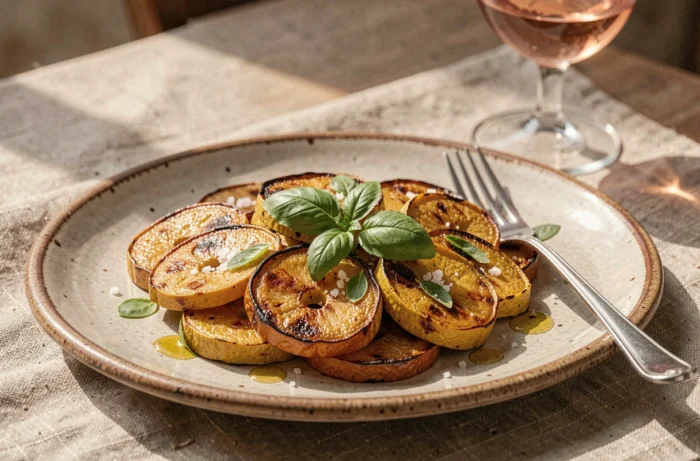
Served alone, a sauté of long squash from Nice makes a side dish for white meats or grilled fish. Its sweetness nicely offsets the acidity of a lemon sauce or a drizzle of balsamic vinegar.
To make it a complete dish, a source of protein and a starch must be added. Sautéed squash pairs well with green lentils or chickpeas, which provide the necessary density for a dinner without weighing down the plate.
A quick gratin can also be built from the sauté: pour the cooked pieces into a dish, add a mixture of fresh cream and beaten egg, sprinkle with grated cheese, and place under the broiler for a few minutes. This is no longer strictly a pan recipe, but the sautéed base shortens the oven time to less than ten minutes.
Origin and season: recognizing a true long squash from Nice at a market
The long squash from Nice does not have a protected designation of origin. It is not covered by any official quality signs such as AOP or IGP. This means that any producer can use the name without provenance control.
The DGCCRF has intensified its checks on products claiming AOP or IGP status, with nearly 1,770 establishments checked in 2023 to verify the reality of labels. Fraud regarding the abusive use of official logos has been highlighted. For the long squash from Nice, the risk is not an AOP fraud (since there is none), but rather a confusion maintained between terroir mention and true quality sign.
At a market or through short supply chains, asking the seller for the exact provenance remains the only possible verification. A long squash from Nice grown in the southeast will generally have a thinner skin and more fragrant flesh than a specimen grown outside its area of origin, but field reports vary on this point depending on growing conditions.
When to buy this squash
The season extends from late summer to the heart of autumn. Harvested young, the long squash from Nice has a thin, edible skin, which simplifies preparation in the pan. More mature, the skin thickens and must be removed before cooking.
A firm squash, without soft spots or spongy areas to the touch, indicates a recent harvest. A dry and corky stem, on the other hand, signals prolonged storage, which is not disqualifying but may affect cooking consistency.
The choice between young squash and mature squash also changes the flavor profile. Young squash is closer to zucchini with a slight vegetal bitterness. Mature squash develops a sweeter, more concentrated taste that better withstands strong spices and long cooking times. For a quick sauté as a side dish for a weeknight meal, the young squash with thin skin remains the most practical choice.