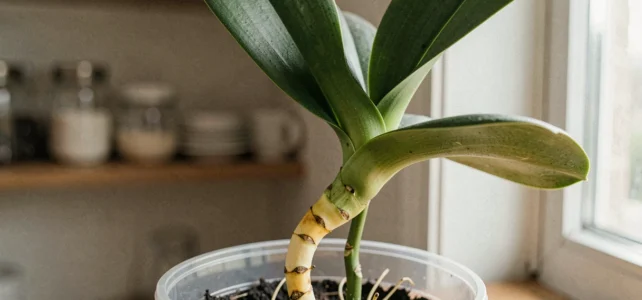
A floral spike of Phalaenopsis turning yellow after the last flowers have fallen is part of the normal senescence process of the spike. We observe this phenomenon in the vast majority of hybrid orchids grown indoors. The plant redirects its reserves to the root system and foliage, and the spike, now unnecessary, gradually dries out. Understanding this mechanism helps avoid premature interventions that compromise re-flowering.
Senescence of the floral spike or root stress signal: differential diagnosis
The distinction between these two situations conditions everything that follows. A spike that yellows from top to bottom after flowering indicates a normal recycling of nutrients. The yellowing progresses slowly, over several weeks, and the plant retains firm, dark green leaves, with silver or green roots when watered.
In contrast, rapid yellowing, within a few days, accompanied by soft leaves or brown and spongy roots, points to a root problem. The substrate remains waterlogged, the roots have lost their functional velamen, and the plant can no longer absorb water or minerals. We recommend removing the plant from the pot to inspect the root system as soon as the spike yellows and the foliage simultaneously shows a loss of turgor.
To better understand the possible causes, consult this detailed guide on why the stem of my orchid is turning yellow.
- Normal senescence: gradual yellowing from the top to the base, intact foliage, healthy roots, no odor from the substrate
- Water stress (excess water): rapid yellowing, soft or wrinkled leaves, brown or black roots, compact and constantly moist substrate
- Thermal or light stress: yellowing sometimes accompanied by burned spots on the leaves, especially in direct exposure behind a window in summer
Substrate and root aeration: the factor that watering alone cannot correct
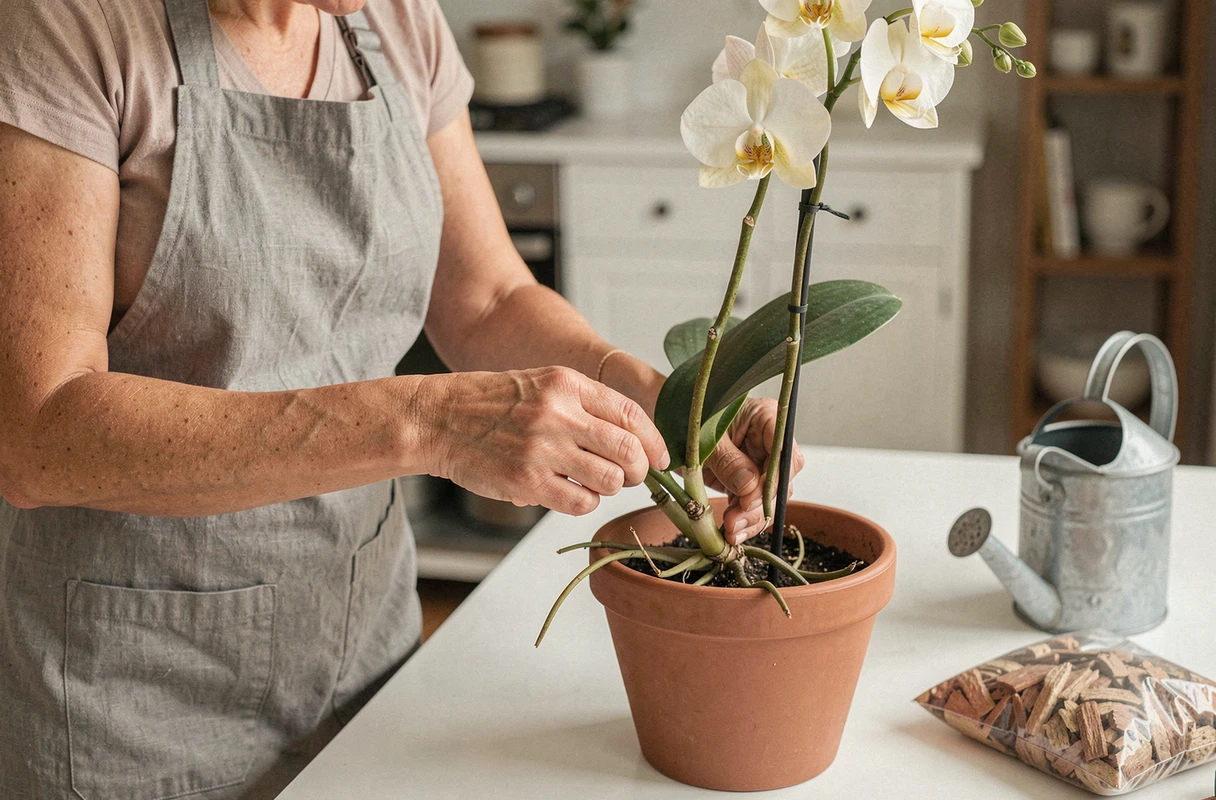
A pine bark substrate degrades over time. The fragments compact, retain more water, and reduce air circulation around the roots. This progressive suffocation causes root rot, which often manifests as yellowing of the floral spike during the cycle, well before the leaves show visible signs.
Repotting every two years in fresh substrate remains the best prevention. We prefer a mix of coarse bark, possibly supplemented with sphagnum or perlite for very dry environments. The pot should be transparent and perforated: without light on the roots and without drainage, even perfectly measured watering is not sufficient.
How to assess the state of the substrate without repotting
Inserting a wooden stick into the substrate after watering provides a reliable indication. If the stick remains moist for more than five days, the substrate is too compact. A normal drying time for a Phalaenopsis indoors is around a few days, depending on the season and ventilation of the room.
Yellow floral spike: cut at the right time and in the right place
The temptation to immediately cut a spike that starts to yellow is strong. However, we observe that premature cutting deprives the plant of nutrients it is in the process of reabsorbing. As long as the spike retains green portions, it still helps to nourish the reserves of the pseudobulb or leaves.
Two scenarios arise:
If the spike yellows completely and becomes dry and brittle, we recommend a clean cut at the base, one or two centimeters above the insertion point on the main stem. The tool must be disinfected (flame or alcohol) to avoid any fungal transmission.
If only the upper part yellows but a lower node remains green and swollen, cutting just above this node may allow for the emergence of a lateral branch. This is not guaranteed, and re-flowering on a branch typically produces shorter spikes with fewer flowers, but it shortens the time before the next flowering.
Light, temperature, and fertilizer: the three levers to prevent premature yellowing
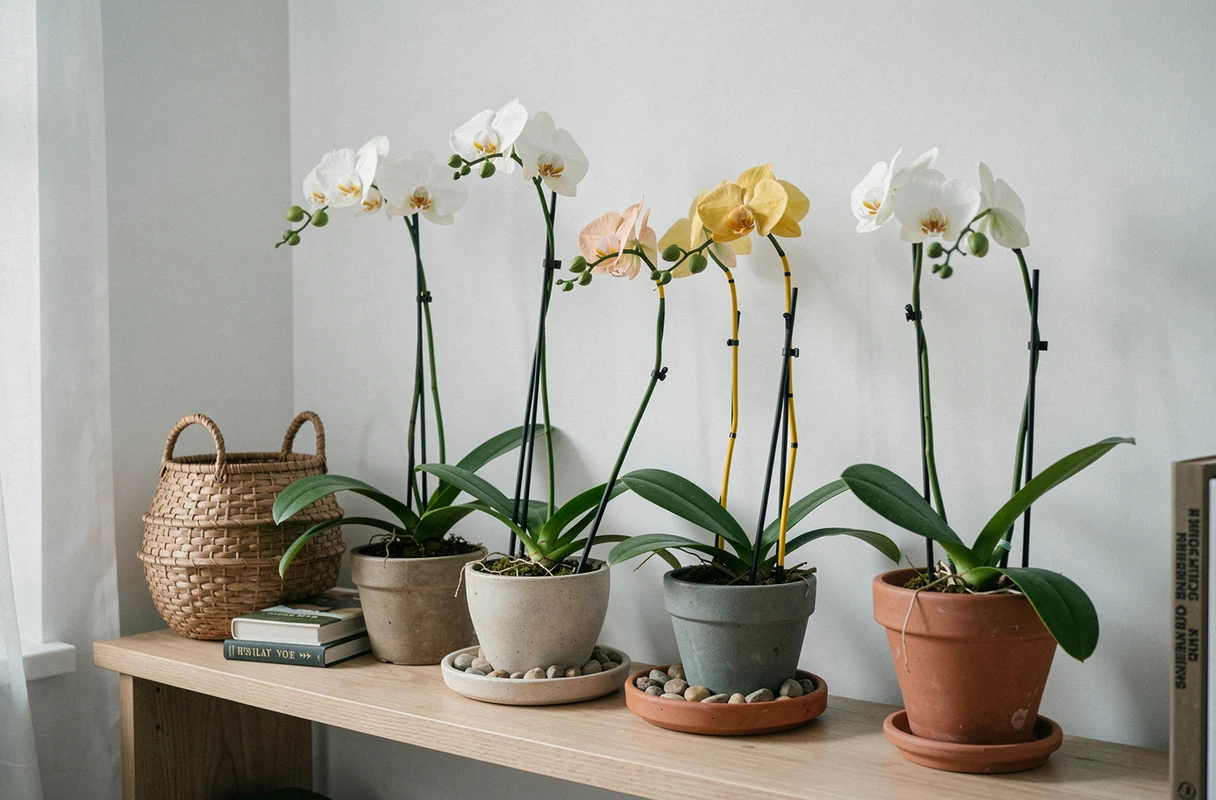
Direct sunlight behind a south or west-facing window, especially in summer, generates very high leaf temperatures. The tissues of the spike, thinner than those of the leaves, are the first to suffer. A bright but filtered light exposure protects the floral spike throughout the flowering period. A light curtain or moving back a few dozen centimeters from the window is often sufficient.
Thermal shocks also play an underestimated role. A cold draft in winter or air conditioning blowing directly on the plant can cause a sudden drop in buds and accelerated yellowing of the spike. Phalaenopsis orchids do not tolerate temperature fluctuations greater than ten degrees over a few hours.
Fertilizer and yellowing: an often indirect link
A prolonged deficiency in nitrogen or magnesium first affects the oldest leaves, which yellow, and then the plant sacrifices the ongoing flowering to preserve its vegetative organs. A balanced fertilizer diluted at each watering during the growth phase maintains healthy foliage and supports the spike. Conversely, an excess of concentrated fertilizer burns the roots and reproduces the same symptoms as excess water.
- Reduce fertilizer by half during flowering to avoid forcing the plant
- Rinse the substrate with clear water once a month to eliminate mineral salt deposits
- Completely suspend fertilizer if the roots show signs of burning (dry tips, brown-red discoloration)
A yellowing orchid spike after flowering deserves neither panic nor hasty intervention. The most useful reflex remains observation: check the roots, assess the substrate, control the exposure. If the foliage remains turgid and the roots healthy, the spike is simply drying out because its role is finished. The next flowering is already being prepared at the base of the plant.