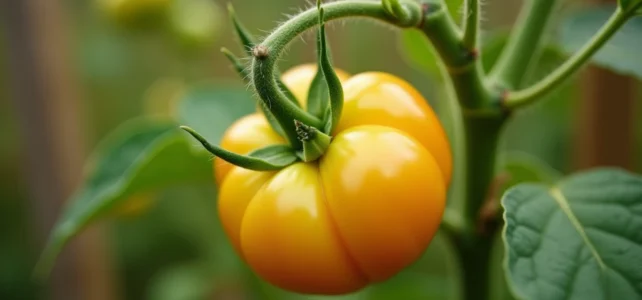
You notice small yellow flowers on your tomato plants and wonder when the first fruits will appear. The answer depends on several parameters, but the time frame between the fertilized flower and the ripe tomato generally ranges from three to six weeks. What varies this time frame is the type of tomato grown, the nighttime temperature, and the quality of pollination. Understanding these mechanisms allows you to act at the right moment to improve your garden harvest.
Nighttime temperature and tomato setting: the often-overlooked factor
Have you ever noticed that some tomato flowers fall off without producing fruit? The problem often lies with the night, not the day. Setting, which is the moment when the fertilized flower begins to form a small fruit, directly depends on the temperature after sunset.
Below 12 °C at night, setting becomes very unpredictable. The flowers remain open, the pollen circulates poorly, and the plant can remain stalled for several weeks without producing any fruit. You then find clusters of wilted flowers on the ground, not understanding why.
When nights remain stable above 15 °C, the transformation occurs within the normal window of a few days after pollination. The ideal range is between 18 and 20 °C at night. In practice, the same plant may take two weeks longer to set its fruits in June than in July, simply due to cooler nights.
If you consult gardening tips on Wiki for Home, you will find additional references on this often underestimated stage.
Cherry tomatoes or large fruits: very different timelines after flowering
Giving a single timeline for all tomatoes is a common mistake. The size of the fruit radically changes the duration between pollination and harvest.
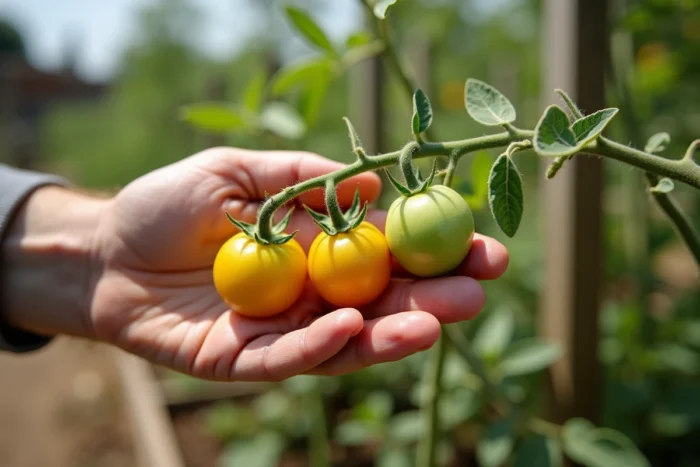
Cherry tomatoes go from fertilized flower to ripe fruit in 20 to 30 days. Their small size requires less time for cellular filling. Early varieties follow a comparable rhythm.
Large-fruited tomatoes, such as beefsteak or heart-shaped varieties, typically require 30 to 40 days from pollination to reach maturity. The fruit must accumulate more sugars, water, and pigments before being ready.
In practice, if you grow both types side by side, don’t worry if you see your cherries ripening well before your large tomatoes. The gap is normal and predictable. To plan your harvests, start from the date you observed the first open flowers and add the corresponding time frame for your variety.
Pollination in the garden: how pollen reaches the tomato pistil
The tomato is a self-fertilizing plant. Each flower contains both male organs (the stamens that carry the pollen) and the female organ (the pistil). In theory, the flower can fertilize itself. In practice, it needs a physical nudge.
It is the vibration that releases the pollen from the stamens and causes it to fall onto the pistil. In nature, this role is fulfilled by:
- The wind, which shakes the stems and flower clusters enough to trigger the release of pollen
- Bumblebees and certain pollinating insects, whose wing beats create a vibration at the frequency suitable for tomato flowers
- The gardener himself, by gently tapping the stem or using an electric toothbrush against the flower cluster
Without vibration, there is no pollination, and without pollination, there is no fruit. This is why tomatoes grown in a closed greenhouse, without airflow or insects, often produce less than those grown outdoors. If your plants are sheltered, consider gently shaking the stems each morning when the humidity is still moderate and the pollen detaches easily.
Too high humidity sticks the pollen to the stamens. Air that is too dry prevents it from adhering to the pistil. The favorable window is in the morning, during mild weather, with average humidity.
The four visible phases between the flower and the ripe tomato
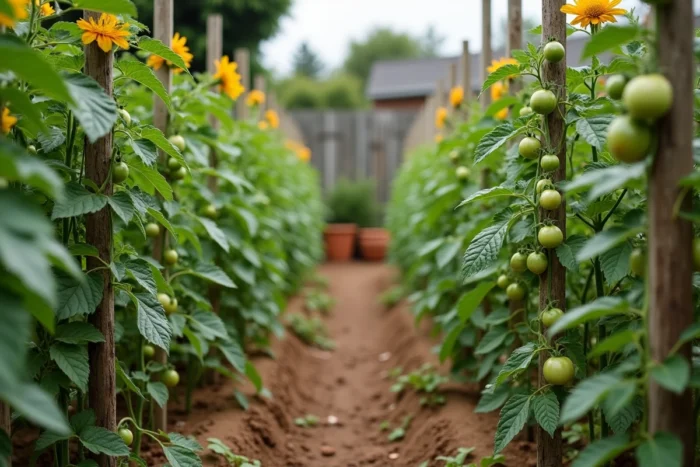
Observing the transformation with the naked eye helps to know where each cluster stands. Here are the steps you can directly spot on the plant.
Flowering and fertilization
The yellow flower opens and remains receptive for two to three days. If pollination is successful, the petals begin to wilt and fall. The small green swelling at the base of the flower is the ovary enlarging: the future fruit is on its way.
Enlargement of the green fruit
The young green fruit gradually swells. This phase lasts several weeks and directly depends on watering and sunlight. The cells multiply and then fill with water and nutrients. This is the period when the plant needs a regular supply of water, without excess.
Veraison and ripening
The fruit reaches its final size, then begins to change color. This turning point, called veraison, marks the beginning of ripening. The pigments (lycopene for red varieties) replace chlorophyll. Ripening takes about one to two weeks after veraison.
One point to keep in mind: once veraison begins, the fruit can continue to ripen even when detached from the plant. Gardeners who need to harvest before the first frosts use this property by placing the turning tomatoes in a warm spot.
Speeding up or slowing down the transformation: what depends on the gardener
Some conditions are beyond control (weather, day length). Others depend on concrete choices in the garden.
- Pruning suckers concentrates the plant’s energy on the already formed fruits, shortening the ripening duration
- Mulching the base of the plant maintains a more stable soil temperature and limits water stress, two factors that promote regular setting
- Removing late flowers (at the end of the season) prevents the plant from dispersing its resources towards fruits that will not have time to ripen
Every week gained on ripening counts, especially in regions where autumn arrives early. At altitude or in the north, choosing early varieties and small calibers remains the most reliable strategy to harvest before the nights drop below the critical threshold.
The time frame between the flower and the ripe tomato is not fixed. It is partly managed by the chosen variety, attention to cool nights, and some simple pruning and watering actions. Observing your plants every day, spotting veraison, adapting your practices: this is where the difference lies between a productive garden and one that waits.